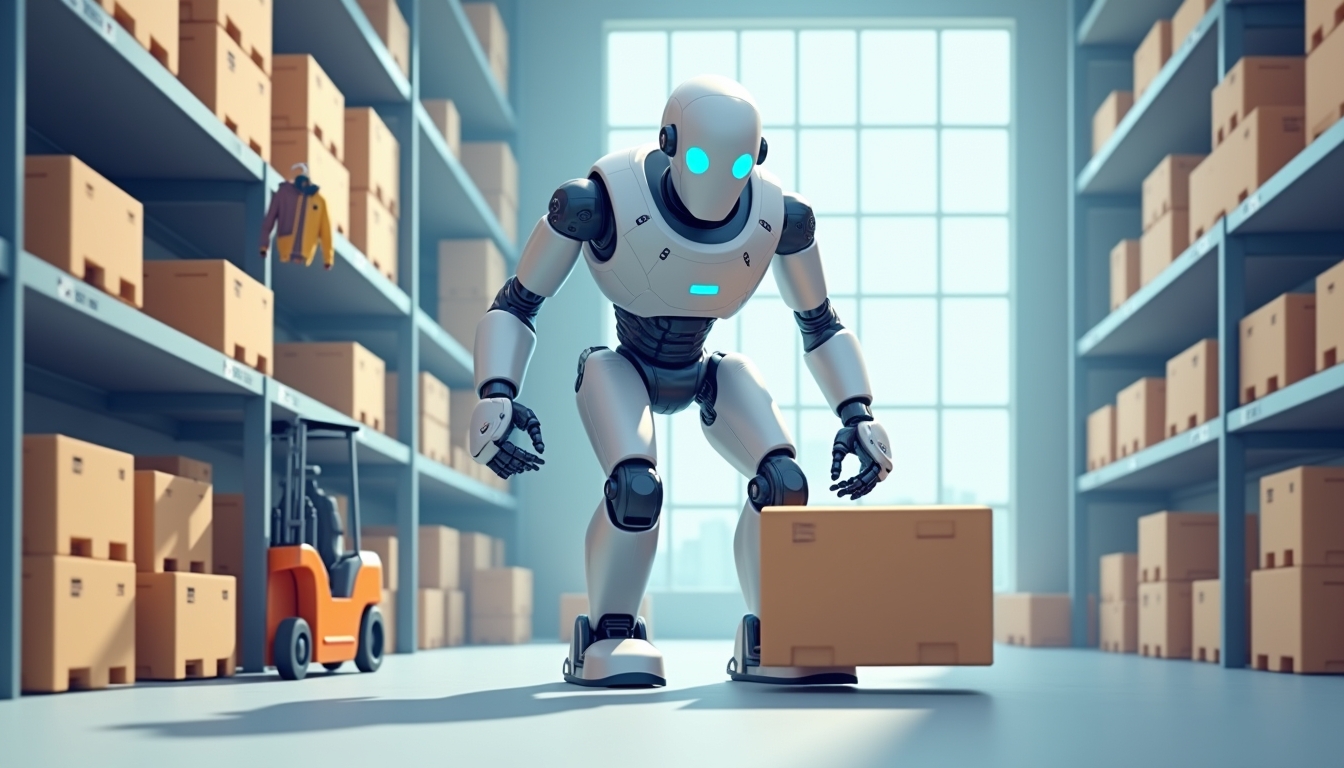
Human-Shaped Robots: The Future of AI Innovation
Revolutionizing Industries with Humanoids
How Human-Shaped Robots Will Transform the Workforce
Human-shaped robots, often referred to as humanoids, are poised to fundamentally transform the workforce across various industries. These human-shaped robots are designed to mimic human movements and interactions, making them particularly suited for roles in healthcare, customer service, and manufacturing. As automation continues to advance, humanoids are expected to take over repetitive tasks, which can lead to both job displacement and creation. According to a BBC report, Tesla’s CEO Elon Musk envisions that humanoid robots, such as the Optimus, could vastly alter daily life and industrial functions, emphasizing their potential to be \”the biggest product of all time.\”
This shift might raise concerns over employment, but it could also spawn new job categories focusing on robot maintenance and oversight. The balance between automation and employment will hinge on how industries adapt to these changes. However, it’s vital to enhance human skills to complement these robots, ensuring that new opportunities are accessible to displaced workers.
Looking forward, the trajectory of humanoid integration into the workforce challenges us to reimagine job landscapes, potentially alleviating labor shortages while maintaining ethical employment practices.
The Financial Upside: Investment and Market Predictions
The financial implications of humanoid robots are significant, with several firms providing optimistic forecasts. Analysts at Morgan Stanley predict that companies like Apple could generate annual revenues of $133 billion by 2040 from humanoid robots. Tesla’s ambitious goals to mass-produce the Optimus aim to create a market standard possibly unrivaled by any existing technology.
Financial projections also indicate competitive landscapes where not only Tesla but firms like Foxconn and Apple are actively exploring humanoid technologies. These market moves suggest that while Tesla leads in hype and vision, its competitors might quickly catch up, leading to a rapid evolution in capabilities and applications.
Anticipating these financial shifts, investment in humanoid pathfinding technologies could yield substantial returns, as industries are likely to seek scalable, efficient solutions to labor challenges.
Public Sentiment and Adoption Challenges
Humanoid robots face mixed public sentiment. On the one hand, there’s excitement about sci-fi concepts becoming realities. On the other, concerns about privacy, security, and ethical implications loom large. Surveys suggest a wary public, hesitant to embrace technology that might invade personal space or replace human workers.
Ethical concerns revolve around autonomy and the potential for misuse, leading to calls for robust regulatory frameworks. With more AI robots entering various life aspects, transparency and ethical manufacturing practices become critical in allaying public fears. The possibility of humanoid robots changing societal constructs necessitates an imminent focus on these aspects to advance acceptance.
As these discussions evolve, crafting a transparent regulatory environment will be crucial to facilitate the integration of humanoids while safeguarding human interests.
The Vision Behind Tesla’s Optimus
Elon Musk’s Strategy for Human-Shaped Robots
Elon Musk’s vision for the Optimus robot is not just a sophisticated piece of technology but a cornerstone of Tesla’s long-term strategy. Musk believes that integrating human-shaped robots into daily life through Tesla’s Autopilot tech heralds a new era for artificial intelligence. As captured by BBC, Musk has launched plans for launching millions of these robots, aiming to redefine labor and tech synergy.
Optimus is expected to provide unparalleled support in both mundane and complex tasks, leveraging advances in AI to augment human capability. This integration promises not just operational efficiency but the potential redefinition of entire industries—all aligned with Musk’s vision of creating \”the biggest product of all time.\”
The strategy serves as a testament to the symbiosis of AI ingenuity and human needs—a dynamic that could transform societal frameworks moving forward.
Innovations in Design and Functionality
Tesla’s Optimus stands out not only for its ambitious reach but also for its technological advancements. Designed in collaboration with firms like Boston Dynamics, Optimus offers a glimpse into future readiness, boasting advanced AI capabilities that prioritize both form and function. The design elements cater to humanlike interaction, ensuring intuitive operation and seamless integration into existing infrastructures.
These innovations highlight a critical trajectory, where the quest is not for mere automation but the establishment of machines that act as genuine collaborators. This approach augments their functionality from simple task execution to complex problem solving—potentially opening up limitless possibilities for application in day-to-day activities.
As Tesla pushes the boundaries, such technological feats highlight the infinite prospects lying ahead with human-shaped robots.
Trend Analysis: Growing Interest in AI Robots
The Competitive Landscape in Humanoid Robotics
The humanoid robotics industry is marked by fierce competition, with major players like Apple, Foxconn, and Boston Dynamics vying to carve a niche for themselves. Each entity invests heavily in R&D to claim leadership in a market projected to integrate seamlessly with everyday life and industry demands.
This race gives rise to strategic partnerships and acquisitions, shaping a dynamic landscape. Collaborations often yield enhanced technological innovations, propelling the industry toward more sophisticated solutions. As highlighted by BBC, the momentum these companies build in humanoid robotics speaks to an inevitable shift in mainstream tech priorities.
By driving innovation and collaboration, industries set the stage for a new age of robotics redefining conventional norms of operation and interaction.
Mainstreaming Robots: From Science Fiction to Reality
The cultural perception of humanoid robots has gradually evolved from sci-fi fascination to practical consideration. Movies and media portrayals play a significant role in framing these robots as both aspirational and dystopian, often shaping public sentiment. However, as advances bring functionalities closer to practical applications, the narrative is shifting.
Humanoid robots are crossing the threshold from futuristic concepts to tangible entities in domestic and professional settings, prompting reconsideration of their roles. This evolution pushes the acceptability of AI innovations as integral rather than alien—a trend that is expected to fuel wider adoption.
The journey from imagination to reality showcases the societal transformation driven by AI, challenging us to envisage new possibilities once limited to the realm of fiction.
Insights on Future AI Development
Bridging Human and AI Interactions
The bridge between human capability and AI innovation is a critical turning point in technology development. The integration of Tesla robots like Optimus highlights the importance of human oversight, ensuring AI’s alignment with human values and needs. With advancements cultivating more sophisticated interactions, the relationship between automation and jobs necessitates careful management.
Psychological interactions with robots also emerge as a crucial area of study. This dynamic extends beyond functionality, encompassing trust, collaboration, and emotional response—factors vital for successful humanoid integration.
Evaluating these complex interactions accelerates our path toward a future where technology complements societal structures, reinforcing the human-AI partnership.
Ethical Implications and Regulatory Needs
The ethical dimensions of humanoid robotics are intricate, requiring proactive regulatory consideration. As AI robots assume greater societal roles, defining ethical boundaries and operational transparency becomes imperative. Scenarios necessitating regulatory intervention underscore the need for frameworks accommodating these technological shifts, as illustrated by prevailing industry discussions.
The dialogue around ensuring safety, autonomy, and ethical AI is essential to navigating future developments effectively. Highlighting these domains fosters accountability, ensuring these technologies improve human experience without compromising values.
By addressing these ethical considerations, the industry underscores its commitment to responsible innovation.
Future Projections for Humanoid Robots
The Landscape of AI Technologies in the Next Decade
Industry experts forecast that within the next decade, humanoid robots will evolve remarkably, with breakthroughs in AI expanding their applications. As production scales and technology matures, these robots are expected to transition from niche gadgets to commonplace utilities in homes and workplaces.
The timelines for mass production are shortening, heralding an era where efficient, accessible humanoids become integral to modern living. Speculating on potential uses, from caregiving to intricate industrial roles, projects a future rich with AI-enabled solutions embedded in everyday routines.
Projections underscore the transformative capacity of humanoid robots, urging industries to adapt swiftly to maximize their benefits.
Impacts on Employment and Economic Structures
The influence of humanoid robots on employment is multifaceted, prompting the reconsideration of existing economic structures. While job displacement presents challenges, new industry sectors and opportunities will likely emerge, potentially reshaping the employment landscape.
Economic models must adapt to accommodate the integration of such technology, foreseeing an interplay between human skills and robot capabilities. As predicted by industry leaders, this technological infusion will unlock novel markets, driving growth and innovation beyond current paradigms.
The prospect of integrating humanoid robots into the economic fabric encourages stakeholders to prepare strategically, ensuring societal and economic benefits.
—
Humanoid robots stand poised to redefine our world, balancing technology’s promise with ethical responsibilities for a harmonious future.
Sources
– BBC News
– Morgan Stanley Report on Humanoid Robotics Predictions