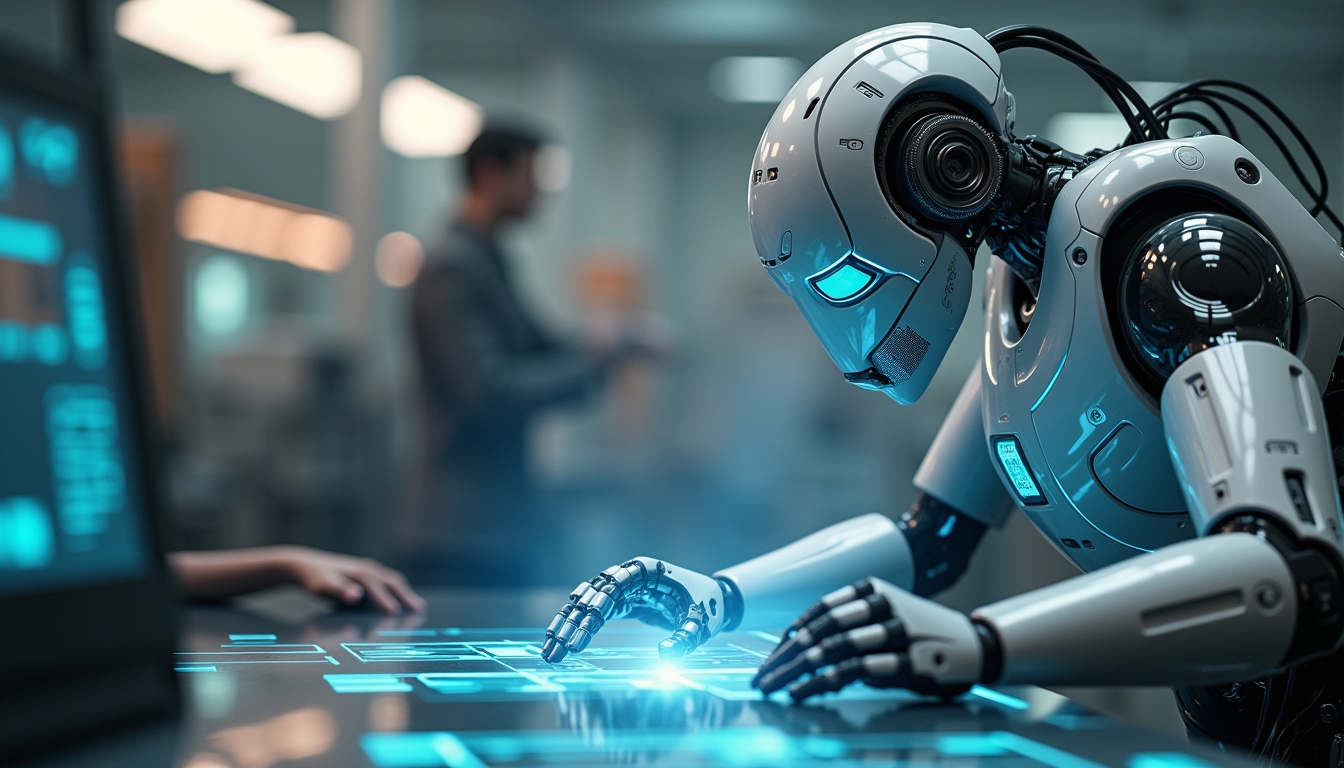
AI Continuous Learning: Navigating Challenges and Opportunities in Machine Learning
The Growing Importance of Continuous Learning in AI
Definition of Continuous Learning
Artificial Intelligence (AI) Continuous Learning refers to the capability of AI systems to adapt and evolve by continuously incorporating new data over time. Unlike traditional machine learning models that rely on static datasets, continuous learning models are designed to assimilate new information seamlessly, thus improving their performance and accuracy. This approach is particularly essential in dynamically changing environments where static models fail to deliver. In essence, AI Continuous Learning empowers machines to mimic the human ability of learning from new experiences and integrating them into their existing knowledge base.
Significance for AI Models
The potential for adaptability in AI models cannot be understated. Continuous learning enhances AI’s ability to adjust its operations based on new data inputs, which is a significant advantage over static models. A traditional AI model may become obsolete unless updated, especially in fields like fraud detection or predictive maintenance where patterns constantly evolve. For example, a static model that identifies fraud may fail when confronted with new, unforeseen fraudulent techniques. The need for continuous updates highlights the relevance of continuous learning in maintaining model efficacy. A study in 2023 highlighted that adapting models via continuous learning can significantly reduce erroneous predictions by up to 30%.
Key Challenges in Implementing Continuous Learning
Despite its advantages, implementing continuous learning in AI poses several challenges. One major barrier is the demand for computational resources. Continuous learning requires ongoing data processing, which results in increased infrastructure costs and technical complexities. Another challenge is ensuring the integrity and reliability of the data being fed into the models. Poor quality data can mislead AI systems and lead to inaccurate outcomes. Paradoxically, while the availability of massive datasets seems beneficial, it also necessitates rigorous data management strategies to filter and clean data inputs effectively.
Current Trends: A Surge in Adaptability for AI Models
Machine Learning Techniques
A surge in advanced machine learning techniques has buoyed the adaptability of AI models. Technologies such as transfer learning and reinforcement learning have become central to facilitating continuous updates in AI systems. Transfer learning allows AI models to apply knowledge gained in one domain to another related domain, reducing the need for large training datasets. Reinforcement learning, on the other hand, relies on feedback loops to refine decision-making processes, which is invaluable for continuous enhancement.
Real-world Applications of Continuous Learning
Industries are increasingly adopting continuous learning models, transforming sectors such as healthcare and finance. For example, in healthcare, continuous learning enables AI to integrate the latest medical findings, thus refining diagnostic algorithms in real-time. In finance, AI models continuously ingest new market data, allowing for more accurate risk assessments and fraud prevention measures. Highlighting a case study, a leading healthcare AI company reported a 45% improvement in diagnostic accuracy after integrating continuous learning techniques—an outcome that would have been impossible with static models.
The Role of Data in Continuous Learning
Importance of High-Quality Data
High-quality data is the lifeline of effective continuous learning. Training AI models on robust and relevant data ensures that learning is valid and applicable. Conversely, utilizing poor datasets can skew results and diminish model reliability. Ensuring data quality involves not only accurate collection but also ongoing validation and cleansing processes.
Strategies for Data Management and Utilization
Effective data management strategies are crucial for continuous learning. Best practices include the systematic collection and curation of data, ensuring that datasets reflect the real-world scenarios AI is intended to model. Regular data refreshing is another critical strategy, as it helps maintain the relevance and accuracy of AI models. Such dynamic data strategies ensure that AI systems can continuously adapt and optimize their operations.
Insight: Integrating Human Oversight in AI Learning
The Need for Human Intervention
Even with advanced AI models, the need for human oversight remains paramount. Balancing AI autonomy with human expertise is essential to prevent over-reliance on algorithms that lack ethical considerations. Human intervention is vital for validating AI outputs, addressing biases, and refining decision-making processes.
Case Studies Illustrating Successful Human-AI Collaboration
Successful human-AI collaborations are evident across various sectors. In finance, human analysts working with AI systems have achieved higher accuracy in predicting market trends. Healthcare providers, too, have harnessed AI to complement medical expertise, ensuring comprehensive patient care. Such partnerships exemplify the immense potential for synergistic human-AI interactions.
Future of Continuous Learning in AI: What Lies Ahead?
Predictions for AI Advancements
Technological advancements are expected to further bolster continuous learning in AI. Emerging frameworks may integrate more human-like reasoning capabilities, enabling AI systems to better understand complex scenarios. Additionally, next-generation methodologies like neuromorphic computing are poised to revolutionize how AI processes information, paving the way for more nuanced learning systems.
Ethical Considerations and Challenges
As AI systems become more autonomous through continuous learning, ethical considerations become increasingly critical. Future regulations may need to address these challenges, ensuring transparency and accountability in AI deployments. The balancing act between innovation and ethical obligations will likely shape the trajectory of AI development in the coming years.
Continuous learning is not just the future of AI; it is rapidly becoming its present, offering both immense possibilities and formidable challenges. The balance between technology and ethical considerations will dictate its path forward.
Sources
– Surviving Extreme Temperatures and the Big Whale Wind Turbine Conspiracy
– Google Pixel Update Adds Battery-Saving Maps Mode, AI Photo Remixing, and Smarter Notifications