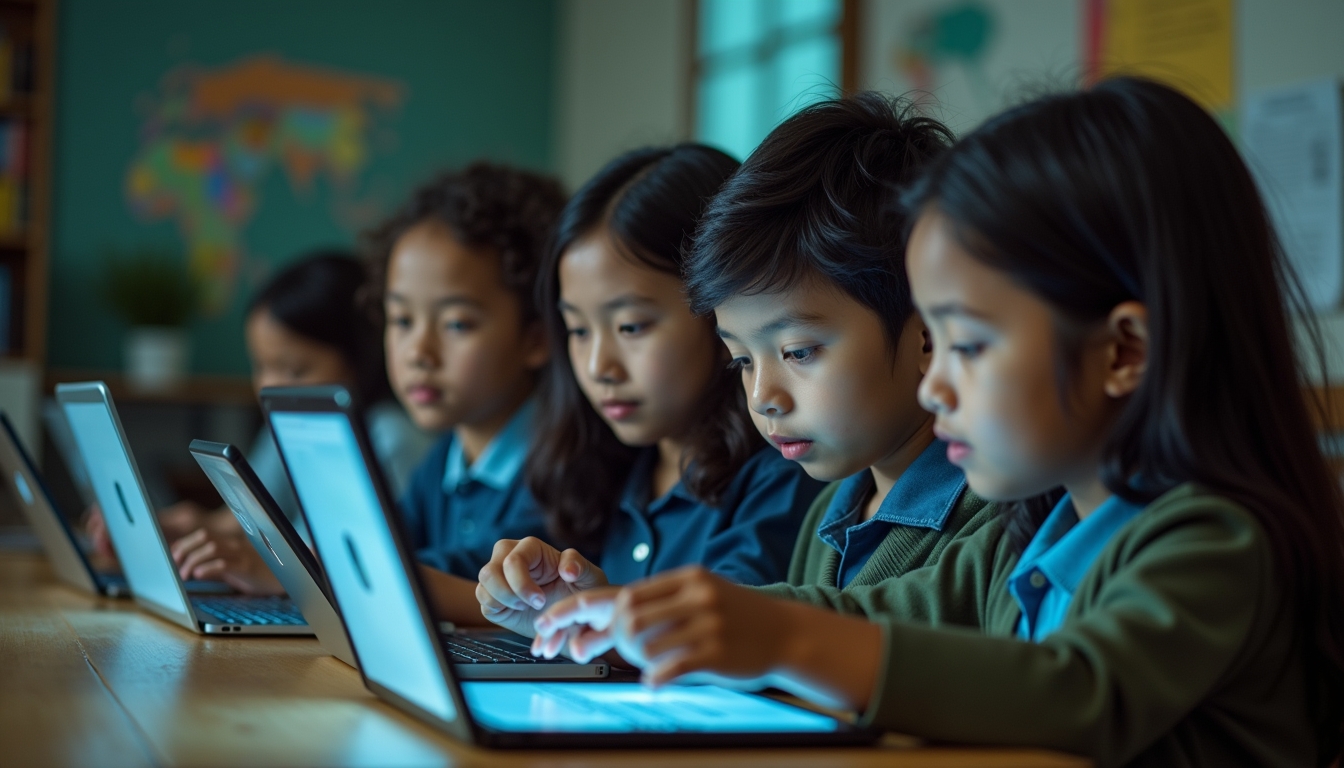
AI in Education: Transforming the Learning Landscape
In an era defined by technological leaps, AI in Education stands out as a provocative force reshaping how knowledge is disseminated, absorbed, and evaluated. While traditional teaching methods still hold sway, the integration of AI technologies offers an innovative approach that challenges the status quo. How exactly does AI alter the fabric of education, and what implications does this hold for the future?
The Rise of AI in Education
Overview of AI Technologies in Education
The classroom of today is an incubator for various AI tools distinctly crafted to enhance learning experiences. From intelligent tutoring systems to assessment tools, AI applications are emerging as pivotal teaching aids. Personalized learning platforms are redefining student engagement by tailoring the curriculum to the needs of individual learners, enhancing efficacy far beyond the capabilities of traditional means. Meanwhile, AI tutors support instructors by alleviating their workload and offering rapid, data-driven feedback on student performance, revolutionizing educational assessment.
Arguably, the foremost contribution AI makes here lies in how it revolutionizes educational assessment. These systems bring precision and depth, providing educators with insights that have, until now, been unattainable. But while the technological benefits are palpable, how do they mesh with established pedagogical frameworks?
Rethinking Learning Methods in AI-driven Classrooms
Cognitive Load Theory and its Application
Enter Cognitive Load Theory, a construct that qualifies the limits of our working memory capacity and informs how learning materials should be structured. In AI-driven classrooms, this theory finds unique applications. AI can dynamically adjust the complexity of instructional content, ensuring that the cognitive load remains within optimal thresholds for learning. Moreover, by analyzing student interactions, AI systems can preemptively adapt lessons to alleviate undue stress, promoting deeper understanding.
Notable case studies, such as those from Fourth-Mind, reveal AI-driven platforms’ ability to individualize learning processes, minimizing cognitive overload. Such advancements underscore the potential for AI to free students from the shackles of rote learning (source). As these technologies evolve, the question remains: will education’s fundamental nature adapt or be utterly redefined?
Personalized Learning: A New Endeavor
The Role of Data in Shaping Educational Experiences
AI’s capacity to sift through vast amounts of data to craft personalized learning pathways marks a new era of educational customization. These tailored experiences heighten student engagement and drive achievement, responding to learners’ evolving needs. But with this comes a plethora of challenges—namely, privacy and ethical concerns surrounding student data usage. Can educational institutions harness this power responsibly?
Customization does more than enhance interaction; it propels students towards more autonomous learning paths. As data becomes increasingly interwoven with education, stakeholders must navigate these challenges to ensure equitable and secure use of AI tools.
The Impact of AI Tutors on Traditional Teaching
Complementing or Replacing Educators?
One provocative question persists: Are AI tutors a complementary asset to educators, or are they poised to usurp their roles? While AI tutors offer unparalleled pacing and adaptive capabilities, their impact raises concerns within the educational fraternity. Many educators harbor legitimate apprehensions regarding AI’s encroachment into their pedagogical domains—concerns steeped in fears of dehumanization and redundancy.
Nonetheless, the crux lies in synergy. Evidence points to increased efficacy when human intuition meets AI precision; such partnerships not only democratize learning but also uphold its quality (source). The future may well favor a hybrid model that capitalizes on both AI’s savvy and the irreplaceable human touch in education.
Challenges and Ethical Considerations in AI Education
Navigating the Road Ahead
As AI infiltrates classrooms, the ethical landscape grows increasingly labyrinthine. Challenges such as data bias and privacy concerns are pressing, threatening to undermine trust in these systems. Additionally, educators face the specter of over-reliance on AI technologies, a trajectory that could erode critical thinking skills.
Addressing these ethical areas requires foresight and pragmatic strategies for responsible implementation. How can stakeholders chart a course that safeguards ethical integrity while embracing technological advancement? Bold steps and proactive regulation are called for, ensuring that AI’s promise is not mired by its perils.
The Future of AI in Education: Predictions and Possibilities
Where Are We Headed?
Looking ahead, the role of AI in education appears poised for exponential growth, with vast potential for sector-wide reforms. Teachers find themselves increasingly cast as facilitators, guiding students amid AI-enhanced environments. This modernization paves the way for policy makers to redefine regulations, ensuring that innovations align with educational imperatives and values.
From personalized learning to ethical AI, the evolving landscape promises to alter both how and what we teach. As we these pursue technological frontiers, a critical eye must measure each leap—lest progress propagate at the expense of education’s most exalted goals.
—
AI’s classroom invasion questions norms—demanding a bold pivot towards a new educational epoch. It is not if education will change, but how radically those changes will alter the balance.
Sources
– AI won’t just change schools; it will force us to rethink learning itself
– Technologies could stop animal testing