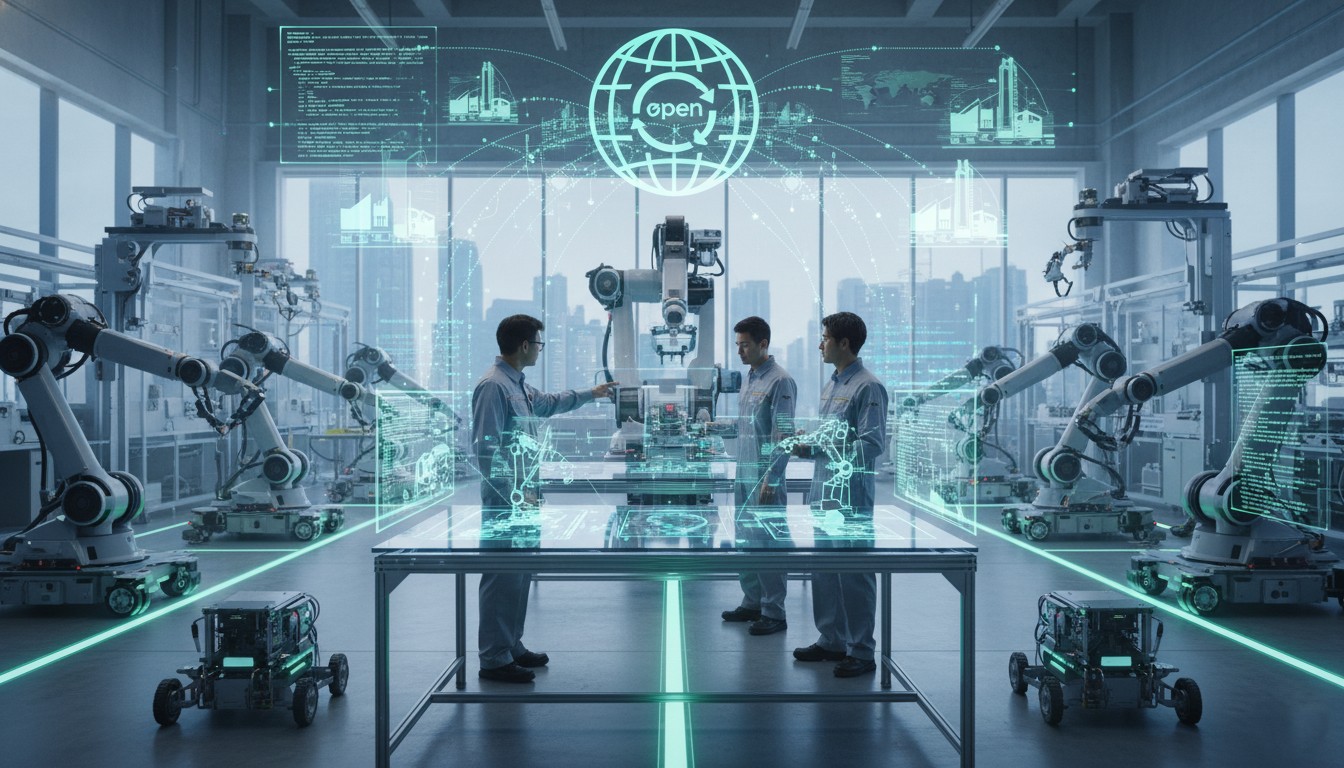
Custom AI Applications: Tailoring Technology for Market-specific Success
Understanding Custom AI Applications
Definition and Importance
Custom AI applications are specialized artificial intelligence solutions designed to address the unique challenges and needs of specific markets and industries. Unlike generic AI tools that offer broad functionalities, custom AI provides businesses with precise capabilities suited for their unique operational contexts. For instance, by automating repetitive tasks and enabling data-driven decision-making, custom AI applications significantly enhance business automation, thus driving operational efficiency and reducing manual workload.
The importance of tailoring AI solutions to fit industry-specific needs cannot be overstated. Custom AI applications ensure that organizations gain a competitive edge by streamlining processes and personalizing customer experiences. Industries like healthcare and finance, where precision is critical, greatly benefit from such tailored solutions that can adapt to their dynamic and sensitive environments.
Comparing Off-the-shelf vs. Custom Solutions
When considering AI integration, businesses face the choice between off-the-shelf tools and custom applications. Off-the-shelf AI solutions offer ease of deployment and lower upfront costs, making them appealing to startups and small businesses. However, they often fall short in flexibility and specificity.
Custom AI development, on the other hand, while potentially more costly and time-consuming, offers bespoke functionalities that are attuned to the particular statistical and operational demands of a business. For instance, scenarios that require robust predictive analytics or industry-specific insights would necessitate a custom-built AI solution to harness full potential. This level of customization ensures scalability and sustained competitive advantage in a rapidly evolving technological landscape.
The Rise of Market-specific AI Solutions
Key Industries Embracing Custom AI
Custom AI is revolutionizing several key industries, notably healthcare, finance, and retail. In healthcare, applications are tailored for disease prediction, patient monitoring, and personalized medicine. Finance industries leverage custom AI for fraud detection and risk management, while retail sectors focus on enhancing customer experiences through personalized recommendations and inventory management.
For instance, in healthcare, the utilization of AI for predictive analytics has shown a significant reduction in misdiagnosis cases. A report by Forbes details how AI-driven diagnosis tools can process patient data in real-time, facilitating quicker and more accurate outcomes.
Driving Factors Behind Adoption
The adoption of custom AI applications is driven by various factors, including the need for personalized customer engagement and specific operational efficiency. As businesses grow, the demand for scalable solutions that can handle increased loads and offer personalized outcomes grows exponentially. This trend is propelled by consumer demand for more personalized services, urging companies to implement AI-driven strategies that align closely with individual client needs.
Looking ahead, businesses must adapt to these evolving demands, ensuring AI solutions are not only innovative but also integrated seamlessly with existing technologies to maximize impact.
Business Automation Through Custom AI
Transforming Operational Efficiency
Custom AI applications play a pivotal role in process automation, transforming business operations with remarkable efficiency gains. By automating routine tasks, companies not only reduce the potential for human error but also reallocate human resources towards more strategic initiatives. Reports indicate that businesses implementing custom AI solutions have seen significant cost savings and process efficiencies, amounting to up to a 40% reduction in operational costs.
Furthermore, these applications allow for real-time data analysis, enabling quicker decision-making and adaptability in market-specific scenarios.
Case Studies in Business Automation
Startups are at the forefront of leveraging custom AI for automation. For instance, a leading tech startup implemented an AI system to automate its customer service process, resulting in a 50% reduction in response time and an increase in customer satisfaction ratings by 20%. Such transformations underscore the impact of tailored AI strategies on operational outcomes and business competitiveness.
Going forward, the integration of market-specific AI solutions will be crucial for startups aiming to carve out a niche in competitive sectors. Continued investment in custom AI development will distinguish market leaders from the rest.
Navigating the AI Development Landscape
Steps for Developing Custom AI Applications
Developing custom AI applications entails several critical phases: ideation, design, deployment, and ongoing monitoring. The process begins with thorough ideation, where understanding specific business needs and stakeholder collaboration are crucial. Design involves translating these needs into testable prototypes, which are then refined through feedback loops during deployment.
Stakeholder collaboration, particularly with domain experts, ensures the developed AI solution aligns with both technological and business objectives, enhancing its effectiveness and adoption.
Essential AI Development Tools and Technologies
The development of AI tools hinges on selecting the right technology stack. Platforms like TensorFlow and PyTorch are popular choices for building robust AI models. For businesses embarking on custom AI projects, choosing the appropriate tools can make a significant difference in performance outcomes.
As technological advancements continue, tools that offer low-code development platforms may lower the barrier to entry, empowering businesses of all sizes to develop and deploy custom AI applications swiftly and efficiently.
Future Trends in Custom AI Development
Evolving Technologies Shaping Custom AI
Advancements in AI technologies, such as low-code platforms and sophisticated machine learning models, are paving the way for more refined and accessible custom AI solutions. These technologies promise to reduce development time and costs, enabling businesses to deploy enhanced applications more swiftly.
Looking ahead, we foresee that as custom AI technologies advance, businesses will be able to offer even more personalized, efficient, and scalable solutions, thereby reshaping industry standards and expectations.
Importance of User-Centric Design
User experience is paramount in the development of custom AI applications. Ensuring a user-centric approach not only enhances the application’s usability but also fosters trust in AI solutions. Moreover, maintaining human oversight in AI deployment safeguards against biases and ethical dilemmas.
The future of custom AI lies in balancing technological innovation with ethical responsibility, where user-centric design and human oversight play crucial roles in fostering sustainable development and deployment practices.
Custom AI applications are reshaping industries by addressing specific needs with precision. Tailoring these solutions ensures businesses gain a competitive edge in a rapidly evolving technological landscape.
Sources
– How to scale LLM apps without exploding your cloud bill
– Forbes article: AI-driven Diagnosis Tools