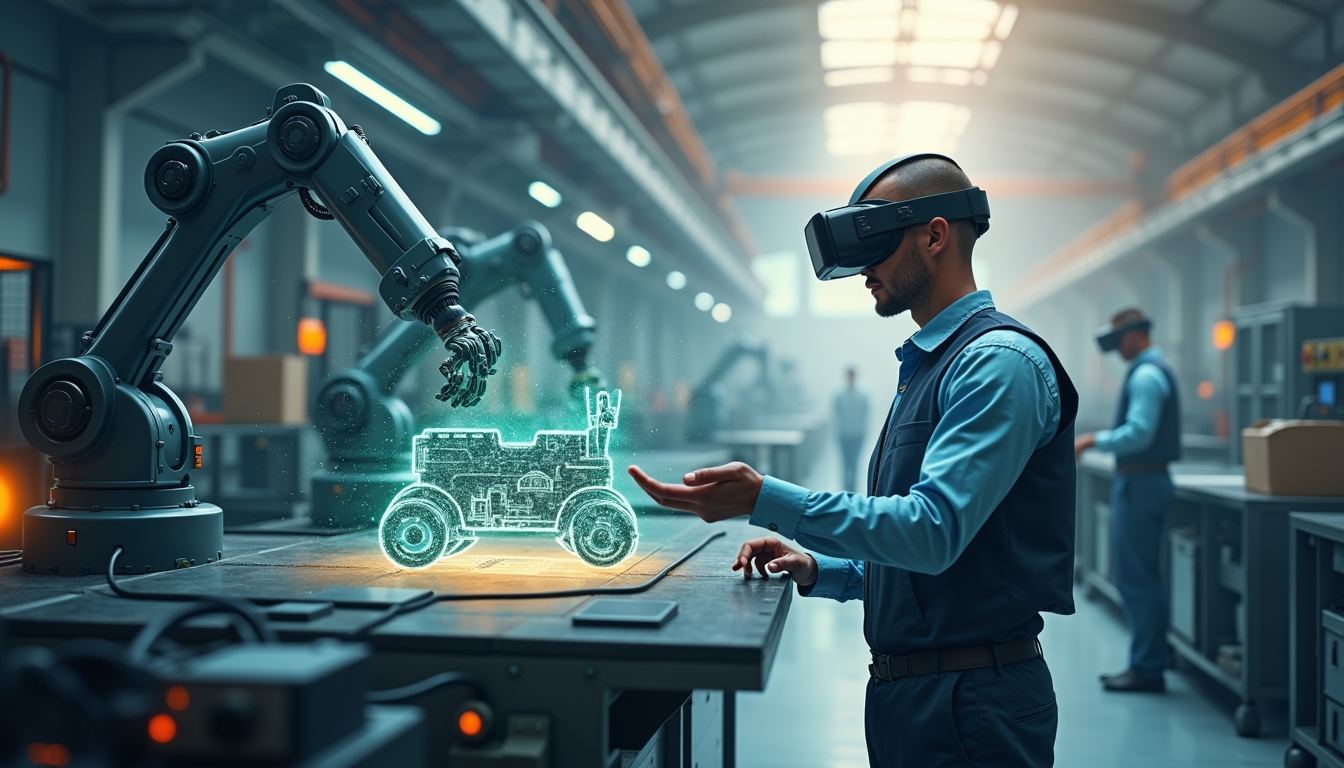
AI Agents: The Next Frontier in Automation and Decision-Making
The technological landscape is rapidly changing, with AI agents at the forefront, reshaping automation and decision-making. As a pillar of innovation, AI agents offer transformative potential across industries, driven by their ability to learn, adapt, and execute complex tasks with precision.
Understanding AI Agents and Their Mechanisms
Definition of AI Agents
AI agents are sophisticated software entities that perceive their environment through sensors and act upon that environment using actuators. They are designed to make real-time decisions by processing large datasets using advanced algorithms. Industries such as finance, healthcare, and manufacturing have embraced these agents to streamline operations and enhance service delivery. Google’s self-driving cars and Apple’s Siri are prime examples illustrating the versatility of AI agents in diverse fields.
Core Technologies Behind AI Agents
The operation of AI agents hinges on a robust technology stack, including machine learning algorithms and neural networks. These technologies facilitate data-driven interactions by evaluating live data inputs, which enables nuanced decision-making. A source article from Hacker Noon explains how these agents process and analyze environmental data, enhancing their autonomy and responsiveness.
Interaction with Environments
AI agents possess the unique ability to interact with both physical and digital environments. Their integration into autonomous systems—like drones and robotic process automation tools—demonstrates how they navigate and act within various settings independently. These interactions are critical as societies move towards fully automated systems, augmenting human capabilities with machine precision.
With advancements in AI, the scope of agent-environment interaction is expanding, promising more nuanced engagements and learning capacities.
The Rise of Automation in Workflows
Benefits of Automation Through AI Agents
Automation through AI agents offers substantial benefits, notably improving operational efficiency and reducing human error. These agents are deployed across sectors to optimize workflows, exemplified by customer service chatbots that handle vast query volumes without fatigue. According to a case study, a manufacturing firm leveraged AI-driven automation to cut operational costs by 30%, highlighting the strategic advantage of integrating AI into workflows.
Impact on Job Roles and Workforce Dynamics
The rise in automation prompts an evolution in job roles, necessitating a workforce adept in AI management and oversight. While some traditional roles may wane, new opportunities arise for professionals skilled in overseeing AI systems and interpreting data analytics. This shift underscores the importance of upskilling in AI technologies to stay relevant in an increasingly automated world.
The Role of OpenAI in Advancing AI Agent Capabilities
OpenAI stands at the helm of innovation in AI, contributing significantly to the development of AI agents. With breakthroughs in natural language processing and reinforcement learning, OpenAI’s projects have set benchmarks, influencing industry standards. Successful implementations, such as GPT models, illustrate the potential of AI agents in transforming information synthesis and decision-making.
Looking ahead, OpenAI’s advancements forecast a future where AI agents become ingrained in day-to-day business functions, driving unprecedented productivity.
Decision-Making Revolutionized by AI Agents
Enhancing Decision-Making Processes
AI agents expedite decision-making by processing information at incomparable speeds and with remarkable accuracy. In financial markets, AI agents analyze trends to inform investment decisions, while in healthcare, they assist in diagnosing conditions using patient data. These capabilities are central to sectors that rely on data-driven decisions, positioning AI agents as crucial assets in operational efficacy.
Balancing Automation and Human Oversight
Despite their efficiency, it remains vital to incorporate human oversight in automated processes to mitigate risks associated with machine error. Case studies, including the Boeing 737 Max incidents, highlight failures in automated systems when lacking human intervention, reinforcing the importance of balance.
Ethical Considerations in AI Decision-Making
AI decision-making raises ethical dilemmas such as bias in algorithms and accountability for actions taken by these agents. Governments are creating regulatory frameworks to address these issues, emphasizing transparency and fairness in AI operations. As technology evolves, so will the landscape of regulations ensuring ethical deployment of AI agents.
Ensuring ethical oversight in AI applications will remain a top priority as AI transitions from a burgeoning technology to a societal mainstay.
Trends to Watch: Digital Efficiency through AI Agents
Current and Emerging Trends in AI Agent Development
Recent trends indicate a surge in AI agent capabilities, marked by self-learning systems that evolve by interacting with their surroundings. Case studies reveal how AI agents optimize logistical operations, reducing delays and costs. As these trends mature, expect a rise in adaptive systems tailored for specific industries, further enhancing efficiencies.
Future Innovations in AI Workflow Automation
Anticipated breakthroughs include collaborative AI agents that work alongside humans, augmenting productivity. These innovations will likely reshape workplace dynamics, fostering a collaborative environment where human intuition complements machine computation, setting new productivity benchmarks.
Global Adoption Rates and Their Implications
AI technology adoption varies globally, yet trends indicate increasing acceptance due to proven economic benefits. As businesses integrate AI agents, they gain competitive advantages, influencing global economic paradigms. Regions lagging in AI adoption may witness a widening competitive gap, underscoring the urgency for widespread technology embrace.
The global proliferation of AI agents signals a transformative era in how businesses approach problem-solving and efficiency.
Looking Ahead: The Future of AI Agents in Society
Anticipated Challenges Facing AI Agents
The evolution of AI agents is not without challenges, including privacy concerns and the need for robust security frameworks. As AI agents become more integrated, overcoming these barriers will be paramount to ensuring trust and acceptance.
Predictions for AI Agent Integration into Daily Life
The ongoing integration of AI agents suggests they will soon permeate everyday life, enhancing personal efficiency and lifestyles. From smart home systems to personalized digital assistants, the impact of AI agents is poised to be profound.
Shaping Policy and Regulation for the Future
Policy-making must evolve alongside AI technology to address emerging challenges and opportunities. Stakeholders, including tech companies and regulators, must collaborate to create frameworks that ensure ethical and beneficial AI agent deployments.
The path forward is clear: proactive policy development is crucial to harnessing the full potential of AI agents, ensuring they benefit society as a whole.
The seamless integration of AI agents into the fabric of daily life heralds a new epoch of operational efficiency and innovation.