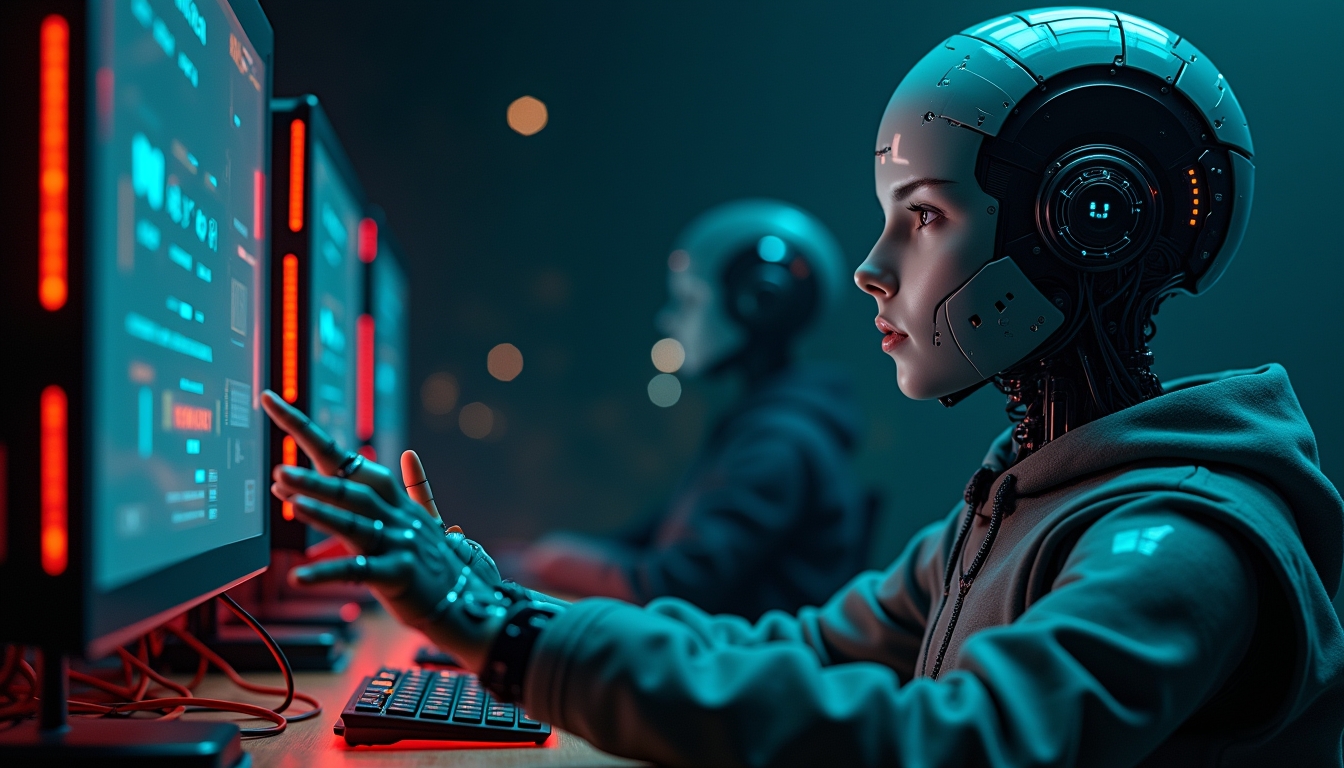
Agentic Programming: The New Frontier in Software Development
The Paradigm Shift in Code Generation
Understanding Agentic Programming
Agentic Programming is poised to transform AI programming, marking a seismic shift in software development. This innovative approach integrates artificial intelligence into code generation, optimizing the interaction between machines and developers. Unlike traditional software development, which relies heavily on manual coding, agentic programming embraces AI’s capacity to autonomously write and refine code. As highlighted in Windson Mateus’s article, this shift embodies a new era where AI doesn’t just assist but collaborates with developers in crafting sophisticated software solutions. Mateus, a seasoned Full Stack Developer, affirms that \”agentic programming might be the next big shift in software development,\” promising unprecedented efficiencies and creativity in coding.
The Role of AI in Enhancing Developer Productivity
AI is revolutionizing developer productivity by automating repetitive tasks, suggesting code snippets, and even debugging errors—tasks that once consumed hours can now be achieved in mere minutes. Dr. One Ms. Hacker’s insights from an analysis of 580 GitHub conversations reveal how integrating AI tools can enhance performance and creativity in coding tasks. These conversations underscore the importance of marrying human ingenuity with AI capabilities, resulting in more efficient and innovative software development processes. As AI becomes more adept, its role in coding will only deepen, demanding an adaptable and proactive approach from developers.
The Collaboration Dynamics: Humans and Machines
Building a Productive Alliance
To harness the full potential of agentic programming, developers must refine their collaboration strategies with AI. This entails embracing best practices for interacting with AI technologies, from employing user-friendly platforms to adopting effective communication styles. Critical to this alliance are tools like automated code review platforms and machine learning models that facilitate seamless cooperation between human intelligence and machine efficiency. Open, iterative feedback loops and transparent communication not only bolster productivity but also foster a mutually beneficial partnership between developers and AI.
Real-world Applications and Case Studies
Real-world case studies illustrate where agentic programming has successfully revolutionized projects, as well as where it has faltered. By analyzing successful outcomes and failures, the development community can garner insights on effective implementation strategies. Data from GitHub, as shared by Dr. One Ms. Hacker, provides a wealth of examples where AI collaboration significantly boosted project outcomes. However, acknowledging where agentic programming has missed the mark is crucial, emphasizing the necessity of continuous learning and adaptive methodologies.
The Impact of Agentic Programming on Software Development
Changes in Developer Workflows
The influx of AI in software development is evolving everyday workflows. Routine tasks like code compilation or syntax checking are now primarily automated, enabling developers to focus on more creative and complex challenges. This shift not only redefines roles but also necessitates new skills in AI literacy and ethical coding practices. As the industry leans towards an AI-centric future, developers will need to embrace lifelong learning to stay relevant and competitive.
Ethical Considerations and Challenges
With AI assuming more autonomous roles, ethical considerations become paramount. Concerns over data security and software integrity must be addressed to prevent malpractices and vulnerabilities. While AI enhances productivity, it also poses questions about algorithmic transparency and human oversight. It is critical to devise robust ethical frameworks that guide the responsible deployment of AI in coding, ensuring technological advancements align with societal values.
Future Trends in Agentic Programming
Insights into the Future of Programming
As agentic programming evolves, the next decade promises more sophisticated AI methodologies and tools that could even challenge human creativity. Industries can anticipate AI’s progression from an assistant role to a more assertive partner in code creation. The horizon of agentic programming is ripe with possibilities, including the emergence of entirely new programming languages and paradigms that integrate AI capabilities at their core.
Preparing for an AI-driven Future
For developers to thrive amid these advancements, focusing on areas like AI-driven data analytics, cloud computing, and cybersecurity will be crucial. Maintaining an adaptive mindset and fostering community collaborations can significantly impact the trajectory of agentic programming. Engaging in active discourse and continuous skill upgrading will ensure developers are not just passive viewers but active participants in shaping the future landscape of technology.
Agentic programming isn’t just a trend—it’s a transformative journey reshaping the essence of coding itself, demanding boldness and adaptability from those at its forefront.
Sources
– Why agentic programming might be the next big shift in software development – Windson Mateus
– Lessons on Developer-AI collaboration from 580 GitHub conversations – Dr. One Ms. Hacker