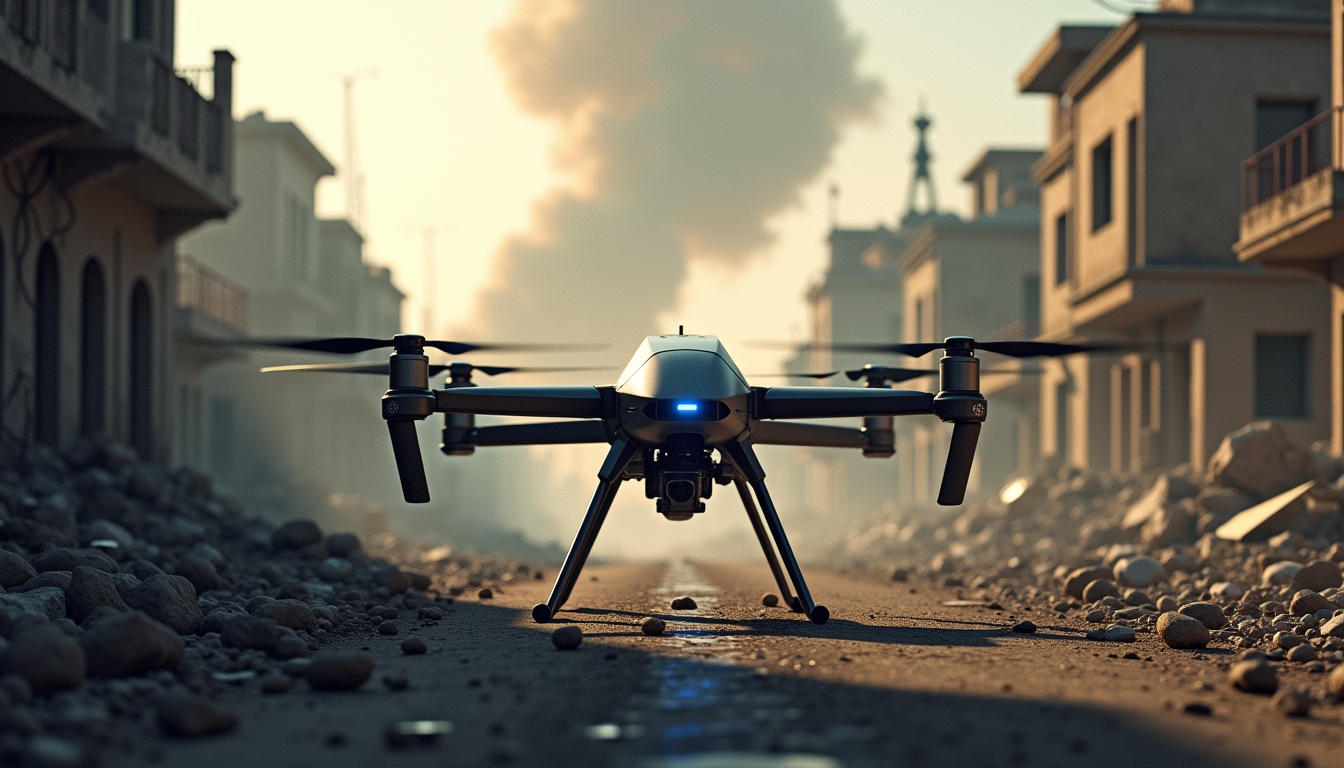
The Future of AI Warfare: Navigating Security Risks and Ethical Dilemmas
In an era where warfare evolves at the pace of technology, the integration of artificial intelligence (AI) into military strategies heralds both unparalleled opportunities and formidable challenges. AI warfare, the new frontier in defense, demands attention not only for its strategic benefits but also for the myriad of security risks and ethical issues it introduces.
Understanding AI Warfare
Definition and Scope
AI warfare encompasses the use of AI technologies to enhance military capabilities. This includes everything from data analysis and logistical planning to autonomous weaponry and decision-making systems. In today’s complex geopolitical climate, understanding AI’s role in the military is vital as it influences both national security strategies and global power balances.
The Role of Autonomous Drones
Autonomous drones represent a pivotal aspect of AI-enabled warfare. Their ability to execute missions without human intervention can optimize efficiency and effectiveness in combat scenarios. However, these capabilities bring significant risks. Drones, as noted by military experts, can be susceptible to hacking and AI malfunctions, potentially leading to unintended military escalations. According to a recent article in Technology Review, these vulnerabilities underscore the urgent need for robust security protocols and fail-safes.
Core Security Risks of AI Warfare
Cybersecurity Threats
AI-driven cyberattacks pose a considerable threat, leveraging vast networks to execute complex, coordinated operations. Past incidents have demonstrated how AI can augment traditional cyber warfare by increasing the speed and scope of attacks. For instance, the 2022 cyberattack on multiple government systems, which exploited AI algorithms to breach defenses, highlighted the profound vulnerabilities inherent in our current security frameworks.
Risk of Autonomous Systems
The ethical debate concerning autonomous systems in warfare revolves around the potential for these systems to make lethal decisions without human oversight. This separation raises moral questions and fears of unintended escalations or misfires, possibly resulting in civilian casualties. Implementing strict ethical guidelines and reinforced oversight mechanisms is essential to mitigate these risks.
Military Ethics in the Age of AI
Moral Implications
The use of AI in military operations necessitates a reevaluation of ethical standards. The balance between human oversight and machine autonomy is a focal point of global debate. As AI systems become more adept at making strategic decisions, ensuring these systems’ alignment with human values becomes crucial. Ethical frameworks, such as those developed by international coalitions, can guide the responsible deployment of AI technologies in conflicts.
Case Studies
Recent military operations employing AI have surfaced numerous ethical challenges. One example involves AI surveillance systems deployed to monitor conflict zones, raising concerns about privacy rights and information misuse. These cases underscore the pressing need for comprehensive ethical oversight.
The Impact of AI on Modern Warfare Strategies
Evolution of Warfare Tactics
AI’s integration into military tactics is transforming traditional combat strategies, allowing for predictive analytics, enhanced reconnaissance, and faster decision-making processes. These changes necessitate new training regimens and military doctrines to capitalize on AI’s capabilities while ensuring that strategic decisions remain ethically grounded.
Influence on Global Power Dynamics
AI’s influence extends beyond individual military strategies, affecting geopolitical power structures. For instance, the potential use of AI in a simulated conflict between China and Taiwan could swiftly alter regional power dynamics, as detailed in Technology Review’s feature. As nations vie for AI supremacy, the global balance of power is increasingly dictated by technological prowess.
Predictions for AI Warfare
Future of AI Integration in Defense
As AI technologies continue to evolve, their role in defense will undoubtedly expand. Upcoming innovations promise to further integrate AI into command systems, autonomy in systems, and sophisticated surveillance tools. The international community must consider a framework for arms control treaties specific to AI technologies to prevent an unchecked escalation in AI arms races.
Conclusion on Ethical Responsibility
Moving forward, it is imperative for nations to navigate AI warfare with a committed ethical compass. By fostering international dialogue and promoting transparent deployment practices, we can chart a responsible path for AI in warfare.
Reflect: Technological prowess should be matched with ethical foresight.
Sources
– The Download: AI-Powered Warfare and How Embryo Care is Changing