Executive Order AI Laws: Understanding the Shift in Federal Policy
The Rise of Federal Regulation on AI
The advance of artificial intelligence (AI) technologies has prompted a growing number of U.S. states to establish their own AI laws, aiming to govern AI’s integration and impact on their economies and societies. This localized approach, while proactive, has led to a patchwork of regulations that can be frustrating for AI developers trying to navigate the rules in different states. Such discrepancies can delay innovation and even discourage investment in AI-driven solutions.
Current Landscape of State AI Laws
The U.S. currently lacks a unified federal AI regulation, leaving states to independently devise their approaches. Some states, like California, have enacted comprehensive privacy laws impacting AI, such as the California Consumer Privacy Act (CCPA), while others have imposed minimal constraints. This disparity can lead to significant challenges for companies operating across state lines. Compounded by the fast pace of technological advancements, these inconsistencies, paired with an evolving legal landscape, may inadvertently stifle AI growth due to the lack of a cohesive structure.
In the race toward establishing a more predictable policy framework, these state laws underscore the pressing need for a streamlined approach to AI regulation at the federal level. Harmonizing the laws could stimulate growth and innovation across states, fostering an environment where businesses can thrive without the constant fear of non-compliance.
Trump’s Executive Order Explained
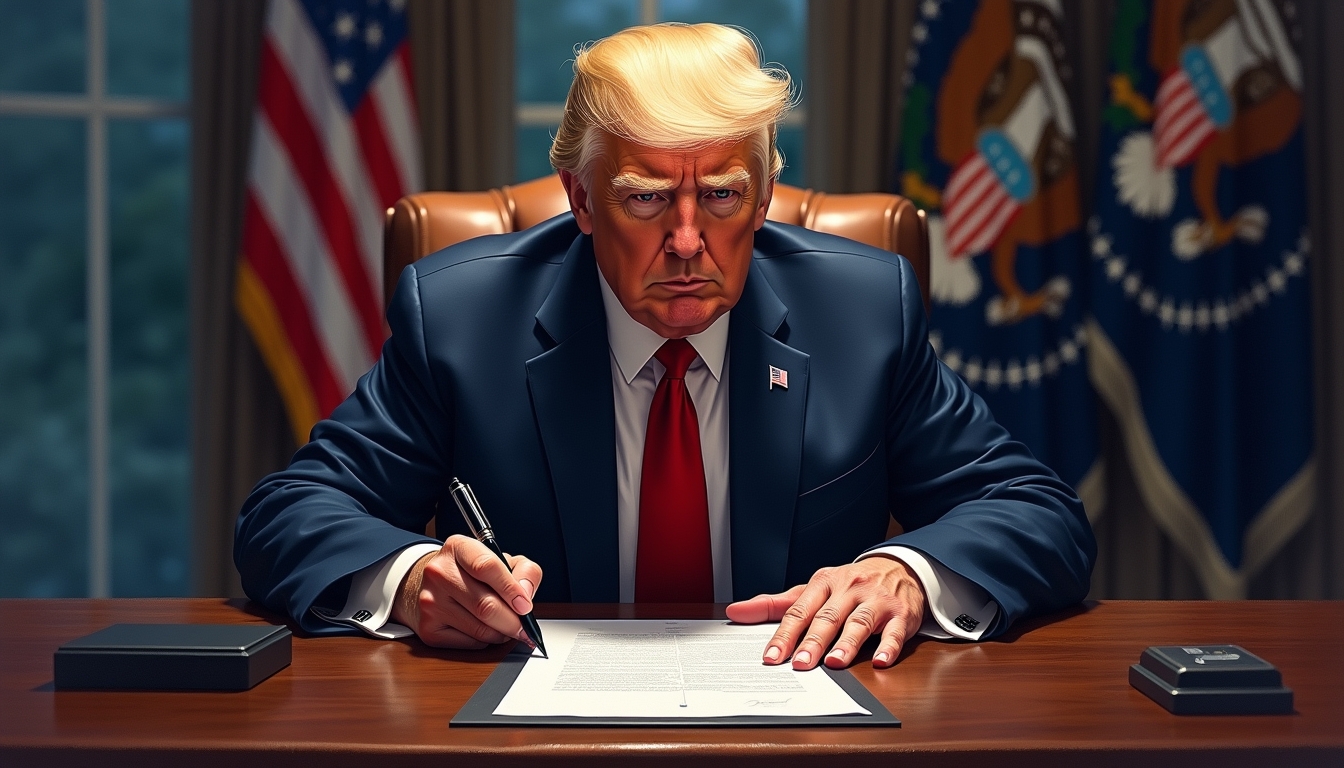
In a significant move towards federal intervention, former President Donald Trump drafted an executive order designed to reshape the national AI policy landscape. The order — titled \”Eliminating State Law Obstruction of National AI Policy\” — aims to simplify AI governance by establishing an AI Litigation Task Force. This task force’s primary mission is to identify and challenge state-level AI laws that conflict with federal objectives as reported by Wired.
The executive order emphasizes the necessity of a cohesive national strategy, potentially reducing the fragmented policy environment across the U.S. The task force will not only scrutinize existing state regulations but also work towards drafting a comprehensive federal AI framework. This initiative could serve as a keystone in the establishment of a robust national AI policy, promoting a unified vision of AI use and governance.
Mapping the Political Landscape: Technology Policies Under Trump
The interplay of politics and technology has become evident as key figures such as former President Donald Trump and Attorney General nominee Pam Bondi navigate the complexities of AI regulation. Their influence and strategic decisions hold significant sway over the evolution of AI policies.
Key Figures in AI Regulation
Donald Trump and Pam Bondi, among others, have been pivotal in shaping the national AI agenda. Their roles in drafting AI-related policies have been marked by a determined push for federal oversight, driven by the belief that a central regulatory framework could enable AI innovation free from cumbersome state-level regulations. As noted by tech figures like David Sacks and Joe Lonsdale, these policies reflect a broader trend toward federal dominance in tech regulation.
However, the impact of their past actions continues to ripple through the current AI landscape. These efforts underscore a departure from decentralized governance, advocating for a framework that aligns more closely with federal goals. The trajectory of their influence could determine the balance between innovation and oversight moving forward.
The Backlash Against Federal Oversight
In response to these federal moves, civil liberties groups and tech advocates have raised concerns about the potential risks of increased federal control over AI regulation. Critics question whether such consolidation might undermine trust and safety within AI development. Citing concerns over transparency, organizations like the American Civil Liberties Union stress that rather than a blanket federal mandate, AI regulation should encompass diverse state perspectives to better address local needs Wired.
Advocates of decentralized regulation warn against an overly homogenous approach, fear that it could stifle innovation by imposing burdensome restrictions and disenfranchising local governance. These concerns highlight a pivotal struggle in technology policy making: balancing innovation with regulation while ensuring public trust in AI systems.
The National AI Strategy: Navigating the Future
Harmonizing State and Federal Laws
The intersection of state and federal laws presents a notable challenge for AI regulation in the United States. Developing a comprehensive framework that harmonizes these laws requires careful consideration of existing state legislation and the incorporation of diverse viewpoints. Current efforts focus on creating synergy between state initiatives and the federal vision, leading to a more streamlined, predictable regulatory environment. Such alignment could alleviate some of the regulatory burdens currently faced by AI companies operating across various jurisdictions.
This initiative to harmonize laws is not without its challenges. Bridging the disparities between state and federal regulations mandates innovative frameworks capable of maintaining local specificity while adhering to national objectives. The critical question is: can a balance be struck, allowing both state creativity and federal strength to coexist for the betterment of AI development?
Innovation vs. Regulation: Striking a Balance
As federal regulation expands, there arises a pressing need to maintain the delicate balance between regulation and innovation. Overly stringent rules can inhibit AI companies from realizing their full potential, suffocating the very innovation that drives economic competitiveness and technological advancement. Executive Order AI Laws must thoughtfully navigate this balance, promoting transparency and securing trust without unnecessarily hindering progress.
Transparency in AI systems is essential to foster public trust; however, achieving this without sacrificing innovation demands a strategic approach. By embedding transparency into the regulatory framework, policymakers can ensure AI developments are both innovative and trustworthy, as underscored by reactions in the tech community Wired.
Looking Ahead: Predictions for AI Regulation
Future Trends in AI Oversight
Looking toward the future, AI regulation is expected to evolve significantly. The federal landscape may witness the development of a standardized regulatory framework that accommodates state-specific needs while maintaining national coherence. Public opinion will likely play a pivotal role in shaping these policies, driving a more inclusive approach to regulation.
The establishment of a cohesive federal AI policy could catalyze the U.S.’s position on the international stage. Competition with global entities for AI leadership might necessitate a careful balance between innovation, regulation, and public trust, positioning the U.S. as a leader in ethical AI governance.
The Implications for AI Development
The evolution of federal AI regulation could have profound implications for both established firms and startups. Companies may need to adapt strategy and operations in response to new policies, affecting everything from compliance to international competitiveness. Maintaining agility in the face of regulatory change will be crucial for AI firms aiming to retain their competitive edge in an increasingly globalized market.
As the regulatory framework unfolds, it will influence international perceptions of AI development, determining the U.S.’s role in the global AI ecosystem. Forward-thinking strategies that embrace both innovation and regulation will position the U.S. as a formidable leader in the international AI community.
Engaging Stakeholders: Moving Toward Cooperative Solutions
Importance of Collaboration Between States and Federal Entities
Cooperation between state and federal institutions is critical to developing an effective regulatory framework for AI. Such collaborations have historically yielded significant benefits in other technology sectors, paving the way for standardized practices that support growth and innovation. For AI, strategic partnerships between state and federal bodies will bolster efforts to formulate a comprehensive policy landscape.
Collaborative policies could circumvent potential pitfalls of a dichotomy between innovation and regulation, ensuring AI advances align with both local and national priorities. Insight from previous collaborations in sectors such as telecommunications can offer valuable lessons for AI policymakers aiming to enact effective governance.
Call for Public Discourse on AI Regulation
Public discourse is instrumental in developing sound AI regulation. Engaging diverse perspectives ensures that AI policies reflect the needs of all stakeholders, from businesses and governments to civil society groups. Advocacy organizations and public input will play critical roles in shaping the conversation around AI laws, fostering a regulatory environment that is both inclusive and adaptive to technological needs Wired.
As AI regulation evolves, encouraging robust public discourse will be key to developing policies that are not only effective but also reflective of broader societal values and expectations.
A comprehensive national AI strategy must balance innovation with regulation, fostering an environment where technology can advance without compromising trust and safety.
Sources
– Wired article on Trump’s executive order challenging state AI laws