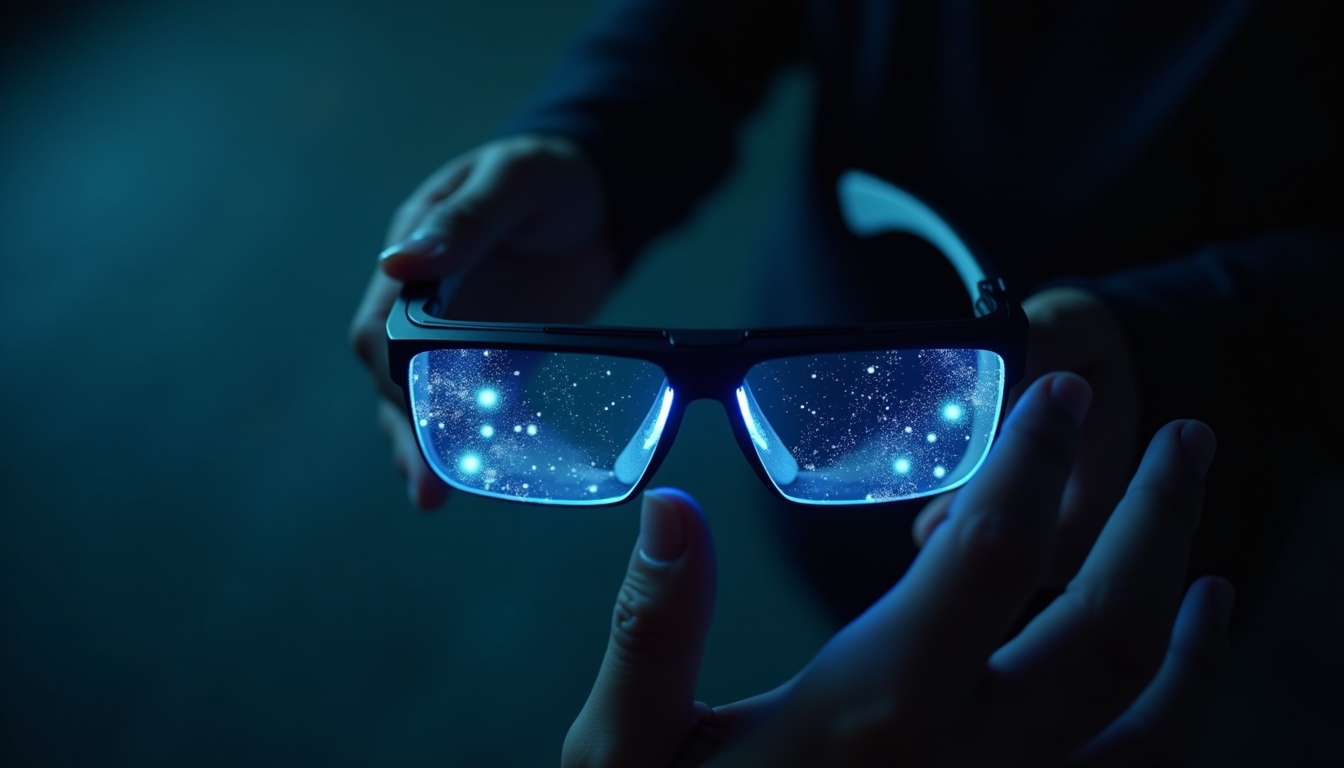
Smart Glasses: The Future of Wearable Technology
With technology unceasingly embedding itself into the fabric of our daily lives, few innovations epitomize this evolution better than smart glasses. These high-tech spectacles represent the next wave of wearable technology, poised to revolutionize not just consumer convenience but how industries operate. As we delve into the distinctive realm of smart glasses, we will explore their burgeoning capabilities shaped by augmented reality and artificial intelligence, and their potential trajectory in the tech landscape.
Understanding Smart Glasses
Definition and Purpose
Smart glasses, akin to traditional eyewear, stand apart with their ability to overlay digital information onto the physical world. This seamless fusion brings to life functionalities that facilitate navigation, translation, and real-time notifications. Imagine a world where maps are projected direct to your lenses, language barriers vanish, and meetings happen in your sightline—an augmented reality turning imagination into reality. In professional realms, smart glasses enable hands-free access to data crucial for on-the-go decisions, enhancing efficiency across sectors from logistics to healthcare.
The Evolution of Technology
Tracing the arc of smart glasses reveals a compelling narrative of technological advancement. Initial iterations like Google Glass flirted more with novelty than necessity. However, today’s models—featuring cutting-edge advancements in AI and augmented reality from brands like Ray-Ban Meta and Xreal—are telling a different story. A significant leap, the integration of machine learning allows for anticipatory functionalities based on user behavior, thus crafting user experiences that are increasingly intuitive. This interplay between AI and AR marks a transformative juncture, pushing smart glasses from mere gadgets to essential tools.
In the words of a recent Wired analysis, \”Smart glasses are evolving with AI capabilities,\” showcasing how this integration is not only enriching user interactions but also broadening practical applications.
Market Landscape
Today’s market brims with options, from the sleek Ray-Ban Meta priced at approximately $409 to the Xreal One Pro at $599, each catering to distinct consumer profiles. Affordability continues to be a barrier, yet the expanse of models suggests a broadening appeal across diverse demographics. While primarily captivating tech enthusiasts and early adopters, smart glasses are gradually piercing traditional consumer bases, indicating a future where they become as ubiquitous as smartphones.
Looking ahead, as prices potentially lower and functionalities heighten, smart glasses are set to attract even wider audiences.
The Rise of Augmented Reality in Smart Glasses
Key Features Driving Adoption
Augmented Reality (AR) lies at the heart of smart glasses’ appeal, providing crucial functionalities like real-time information overlays and interactive guides. Leading models harness AR to transform everyday activities, offering unparalleled benefits from receiving real-time alerts to engaging with interactive content. The convergence of real and virtual worlds through these features accelerates the mainstream adoption of smart glasses, underlining their practicality and entertainment value.
Real-World Applications
The evolution of AR in smart glasses finds significant resonance in industries like gaming, where immersive experiences redefine interactive engagement. Healthcare professionals stand to benefit from hands-free access to patient data, while businesses leverage AR to enhance workspace efficiency with virtual task boards. The scope of applications is as diverse as it is transformative, with positive user feedback reinforcing the perceptible advantages over competing brands.
Yet, as noted in Wired’s coverage, differences in user experiences speak to the ongoing refinement needed in usability and interface design source.
Challenges and Limitations
Despite the promise of AR, smart glasses face notable hurdles. Technical limitations around battery life and clarity in bright sunlight remain primary concerns. Furthermore, achieving a design that binds technological sophistication with user-friendly aesthetics continues to challenge manufacturers, delaying widespread consumer acceptance.
Innovation, alongside user-centric design, will be pivotal in overcoming these barriers to seamless adoption.
AI Integration: Smart Glasses and Machine Learning
Enhancing User Experience
AI integration in smart glasses is redefining the user experience through features like voice recognition and contextual prompts. These smart functionalities aim to heighten personalization by learning user preferences, thereby enhancing relevance and interaction fluidity. By harnessing AI, smart glasses not only enrich user experiences but also refine their adaptive capabilities.
Privacy Concerns
However, the incorporation of AI brings to the forefront significant privacy challenges. With smart glasses equipped for constant video recording and data capture, concerns about surveillance and misuse loom large. As a Wired article underscores, \”Privacy concerns are prominent with smart glasses that have cameras,\” elucidating the delicate balance designers must maintain between technological advancement and user rights.
Balancing Innovation and Ethics
The deployment of smart glasses beckons an ethical approach, demanding rigorous frameworks to safeguard privacy while fostering innovation. User consent and transparent data management practices are critical in nurturing trust without hindering technological progress.
Navigating this ethical landscape will be essential in setting standards for future developments, ensuring innovations honor user autonomy and privacy.
Future Trends in Smart Glasses
Emerging Technologies
The horizon of smart glasses is painted with emerging technologies poised to enhance their capabilities further. Developments in eye-tracking, gesture control, and energy efficiency are expected to hallmark future iterations, marrying greater convenience with sustainability.
Market Predictions
Market forecasts predict robust growth in the smart glasses segment, driven by ongoing advancements and the entry of established tech giants. Such projections hint at a vibrant ecosystem wherein diverse players push the envelope of innovation, continually redefining benchmarks.
In the words of the Wired article, \”Different models cater to various user needs, from gaming to work,\” exemplifying how the market’s expansion is aligning products with varied consumer demands.
The Role of Big Tech
Big tech’s foray into the smart glasses arena underscores their transformative potential. Companies like Apple, Google, and Microsoft are pivotal players deploying resources and research to elevate the sector, their innovations promising to reshape the technological frontier of smart wearables.
As big tech steers smart glasses towards mainstream adoption, their contributions will serve as catalysts, further setting the stage for unprecedented integration within our digital lives.
Conclusion: Vision for Tomorrow
Implications for Consumers and Developers
Smart glasses herald a new era for consumers, transforming daily routines with intelligent, immersive interactions. For developers, the emphasis lies in creating designs that elevate user engagement while addressing the very real challenges of privacy and ethical deployment.
Final Reflections
Smart glasses stand at the cusp of mass adoption, a testament to human ingenuity enhancing life through technology. As we venture into this brave new world, the delicate balance between progress and ethical considerations will remain the guiding principle for futuristic innovations.
The future of smart glasses is as promising as it is intricate, demanding diligent stewardship from both creators and users to harness their potential responsibly.